
 +86-18750595100



Copyright © 2025 Fujian Xinyun Machinery Development Co.,Ltd. All rights reserved. Site Map


Time: 2026-09-14
Choosing between a facial tissue machine and a napkin paper machine decides your raw material, converting process, and sales channel before you spend on equipment. This comparison covers process, material, output, and floor space so first-time investors pick the right entry line. Xinyun Machinery has supplied both lines to buyers in Africa, South America, and the Middle East and shares selection guidance below.
Facial tissue and napkin lines share the same converting principle but differ in folding, printing, and finishing stations. A facial tissue machine converts parent rolls into soft interfolded sheets through embossing, slitting, and pop-up folding. A napkin machine adds a printing station and a quarter-fold or multi-fold unit that facial lines do not carry. These added stations change the operator skill and reject risks for each line.
Napkin paper runs at a basis weight of 18 to 25 gsm per ply to hold its shape after printing and folding. Facial tissue uses low-basis-weight paper and is built softer, normally in 2 to 4 plies for skin comfort. Both consume standard tissue parent rolls, so raw material sourcing overlaps for first-time buyers and simplifies early procurement.
A facial tissue machine applies point-to-point embossing and interfolding that lets sheets pop up one by one from a box. A napkin machine uses mechanical quarter-folding and often combines embossing with 1 to 2 color printing on the web. The napkin printing step adds a printing unit, operator skill, and ink cost that facial lines avoid.
Facial tissue ships as interfolded pop-up boxes or soft packs for retail and hotel use. Napkins ship as folded squares such as 200×200, 300×300, or 400×400 mm for food service and catering. The two formats use separate packaging machines, so packing investment differs even when the converting stage looks similar.
Facial tissue machines accept parent roll widths from 400 to 2800 mm, covering compact and wide production needs. Napkin machines use a narrow parent roll width of 200 to 400 mm, a range that matches the small folded napkin format. The width gap means the two machines are not interchangeable and need different workshops and unwinding stands.
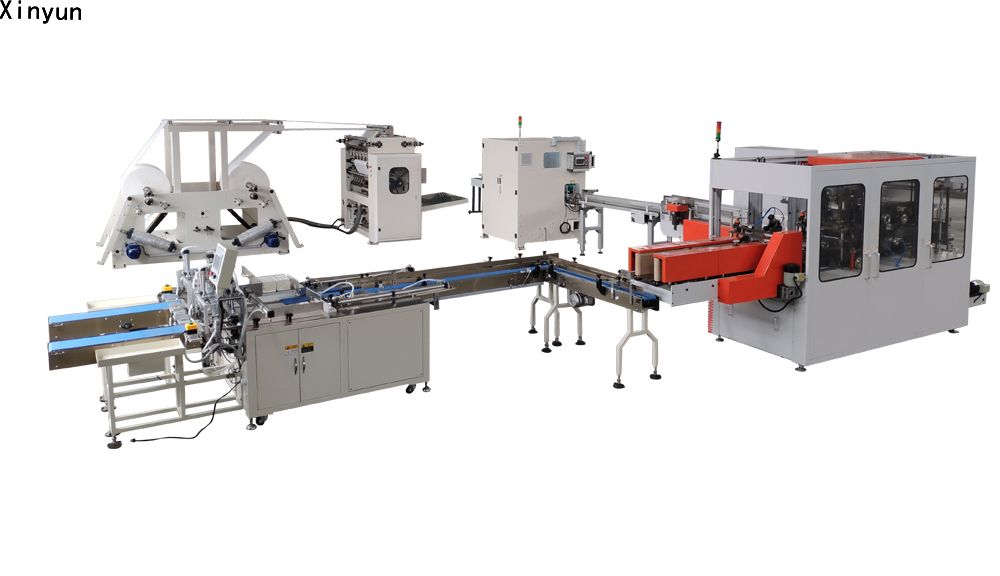
The Xinyun XY-GU-20A facial tissue machine is a multi-channel soft-pack line built for softer 2 to 4 ply product. It handles parent roll widths from 400 to 2800 mm and supports optional embossing for bulk and feel. Xinyun configures the line with installation support so new buyers can reach stable output faster.
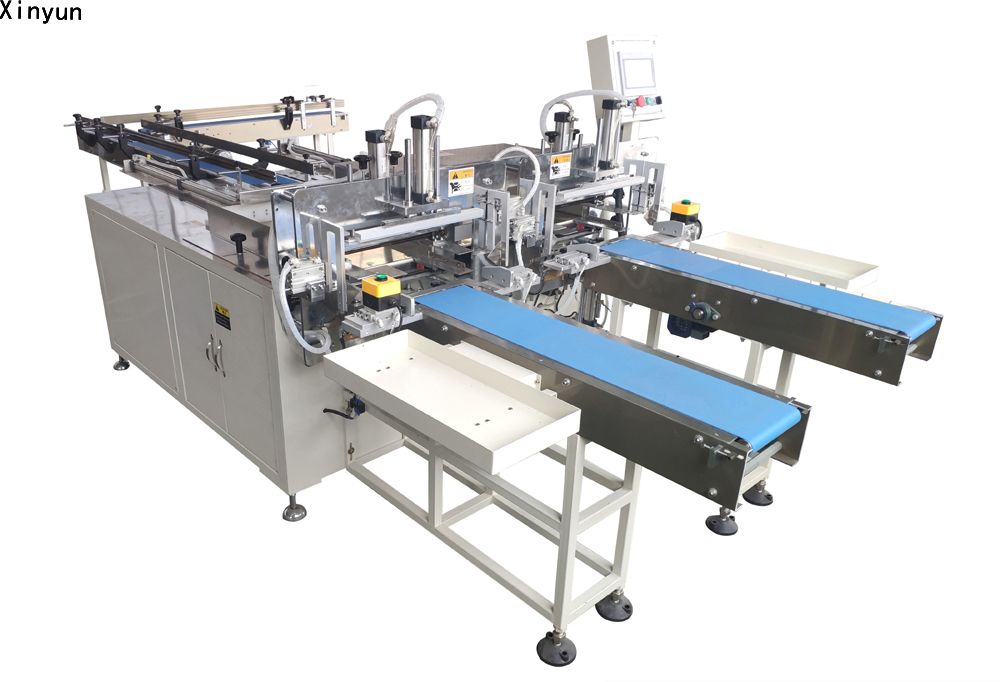
The Xinyun XY-OQ-7000A automatic folding napkin machine runs on narrow 200 to 400 mm parent rolls. It produces finished sizes such as 200×200, 300×300, and 400×400 mm in 1 to 3 plies at 18 to 25 gsm. The narrow-width design is the clearest physical difference from a facial or toilet tissue line.
A complete small tissue line, facial or napkin, costs between USD 15,000 and USD 50,000 including rewinding, cutting, and packing. The napkin line carries slightly higher entry cost because of the printing and folding units built into the converting line. Xinyun Machinery offers bundled lines with installation support for African and South American buyers to reduce setup risk.
An entry-level facial or napkin line produces 1 to 2 tons of finished product per day. This output covers a local distribution radius of roughly 50 to 100 kilometers for a new brand. Upgrading to a wider automatic line raises capacity to around 5 tons per day.
A facial line at the lower 400 mm width needs a compact workshop, while wider 2800 mm widths need more than 300 square meters of floor space. A napkin line stays small because its 200 to 400 mm parent roll needs less unwinding and storage area. Plan the layout for raw roll storage, converting, and finished goods separately before signing a lease.
A napkin line demands more operator attention because color registration and fold accuracy affect the reject rate. A facial line is simpler to run once embossing and interfolding settings are fixed. Both lines benefit from Xinyun's installation support and operator training for first-time buyers.
Choose a facial tissue machine if your market prefers boxed soft tissue and you want simpler operation with fewer reject risks. Choose a napkin machine if restaurants, events, and hospitality channels dominate your target area and you can manage printing quality. Many new investors start with one line, then add the second after the first reaches stable 1 to 2 tons of daily output.
Facial tissue sells through retail boxes and hotels, with steady repeat purchase in urban areas. Napkins sell through food service, cafes, and bulk catering, with stronger demand near tourism and event venues. Check local import data and supermarket shelf presence before committing to either line.
Start with one line at the lower end of the USD 15,000 to 50,000 range to limit early risk. Add the second product line once monthly volume justifies a wider machine and a larger workshop. This staged approach keeps working capital free for raw material and distribution.
Avoid buying both lines at once if your team has no converting experience, because two learning curves raise the reject rate. Confirm local parent roll supply at the correct grammage band — 18 to 25 gsm for napkin, softer grades for facial — before finalizing machine specs. Request a factory test run with your own paper sample before shipment.
Facial tissue and napkin production share the same raw material supply but differ in converting, printing, and packing. A facial line (XY-GU-20A) accepts 400 to 2800 mm parent rolls and runs 2 to 4 plies for softer product. A napkin line (XY-OQ-7000A) uses narrow 200 to 400 mm rolls at 18 to 25 gsm with 1 to 3 plies and printed folds. Both fit a USD 15,000 to 50,000 startup budget at 1 to 2 tons per day, scaling to 5 tons per day on wider lines.
Contact Xinyun Machinery for a customized quote and production line proposal tailored to your market. Tell us your target product, daily output, and workshop size, and we will recommend the right starting line and provide installation support. Get your machine price today.

Professional Manufacturer of Tissue Paper Making Machine.





By continuing to use the site you agree to our privacy policy.