
 +86-18750595100



Copyright © 2025 Fujian Xinyun Machinery Development Co.,Ltd. All rights reserved. Site Map


Time: 2026-09-02
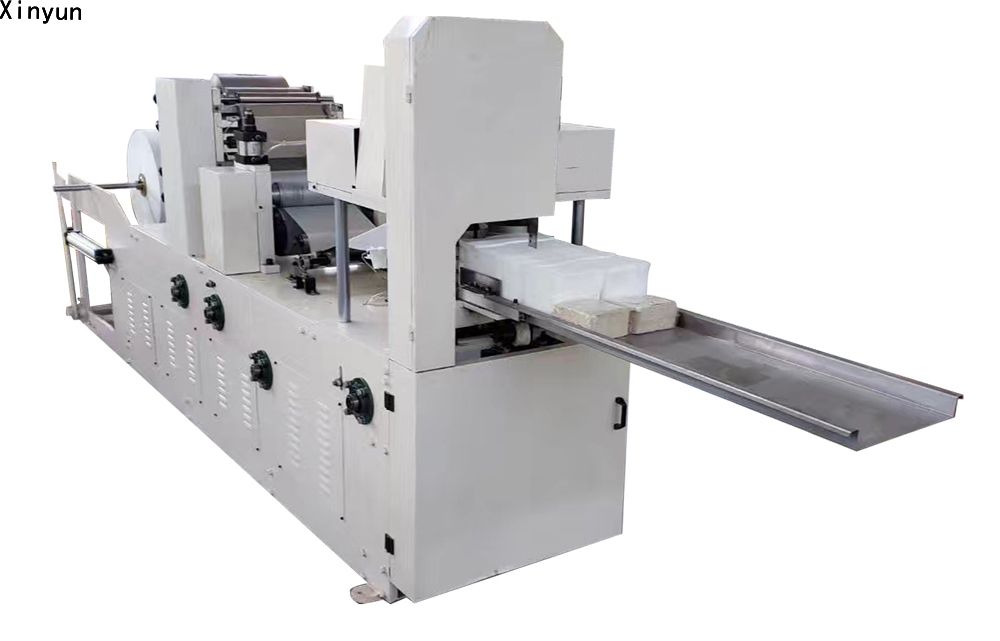
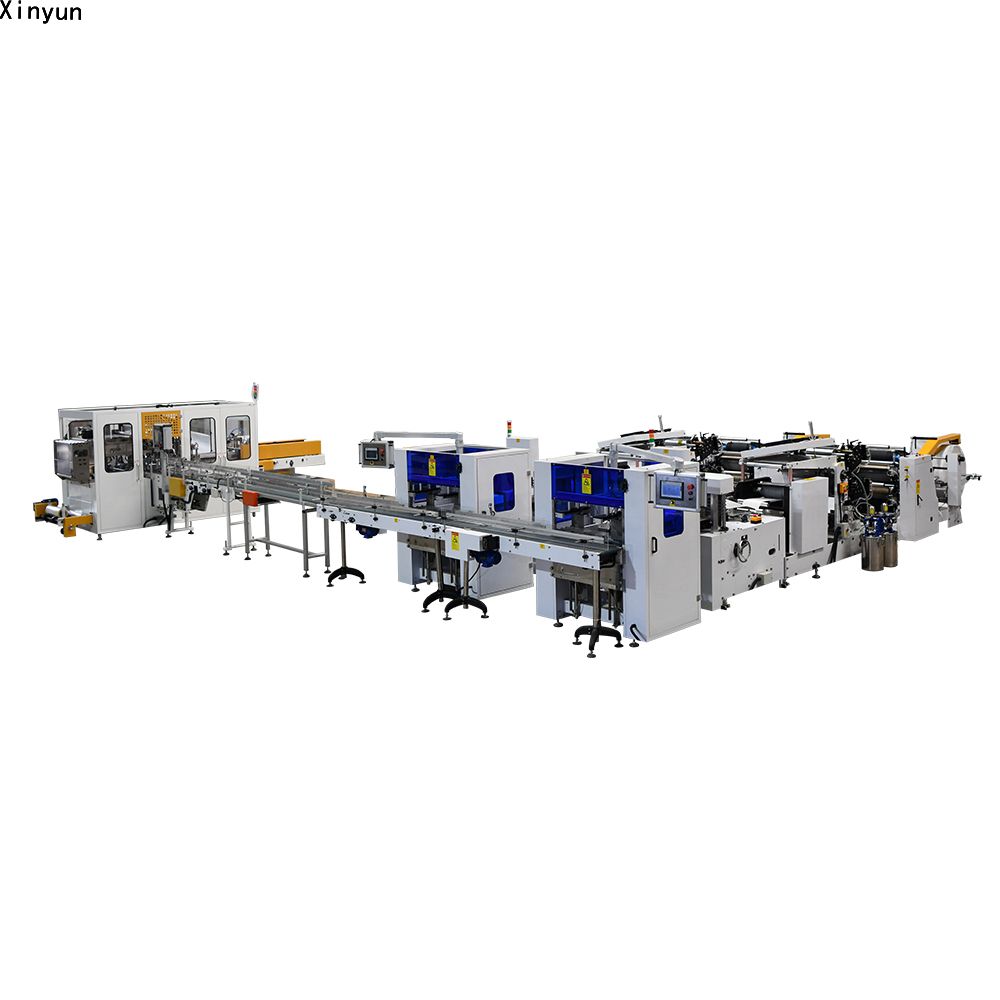
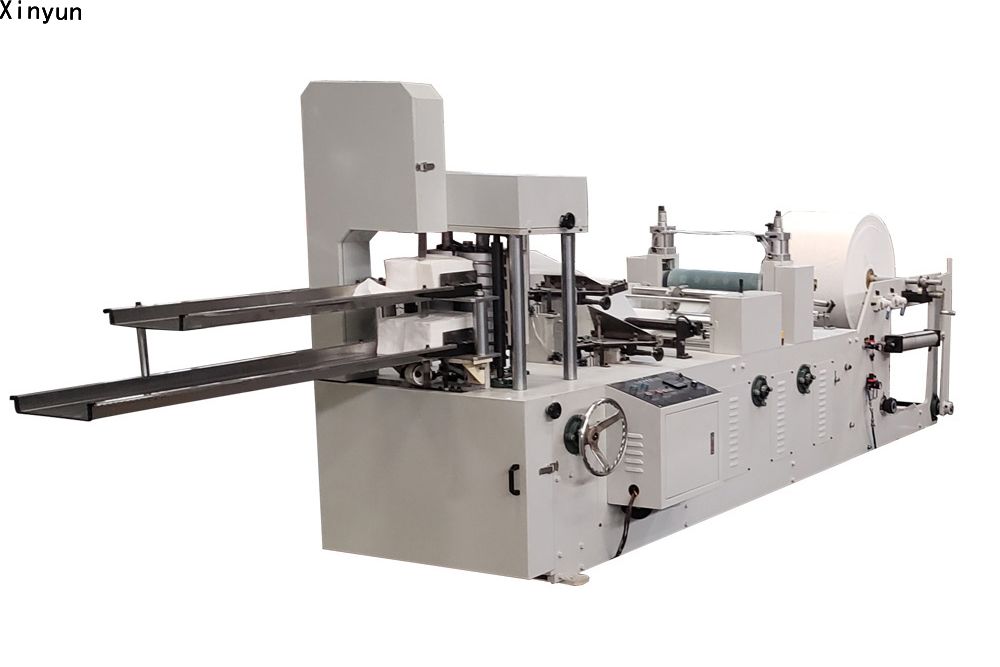
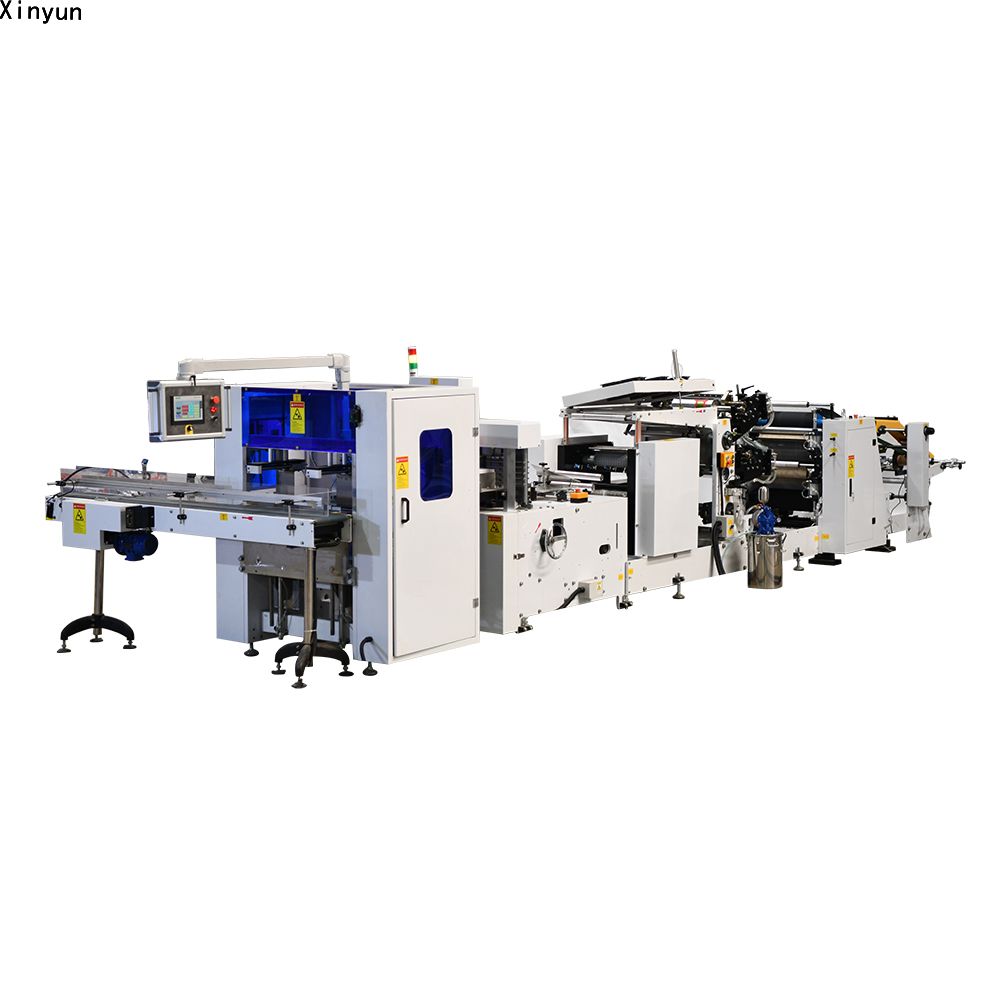
Poor napkin quality usually traces back to five controllable factors: web tension, embossing roll condition, parent roll grammage, print registration, and blade wear. The XY-OQ-7000A automatic folding napkin machine from Xinyun Machinery works with napkin base paper at 18 to 25 gsm and folds parent rolls from 200 to 400 mm wide, so material selection stays inside a proven window. Xinyun ships these napkin lines to buyers across Africa, South America, and the Middle East, and the same defect patterns repeat across markets. This article breaks down each common quality problem with the measurable cause and the fix that restores specification.
Folding defects appear when the web enters the folder at inconsistent tension or the folding plates drift out of position. Most napkin machines require a web tension band of 3 to 6 kgf to keep the sheet flat through the folder. When tension drops below 3 kgf the sheet wanders; above 6 kgf the fold lines stretch and skew.
Calibrate the dancer roller and air brake weekly so the tension stays inside the 3–6 kgf window. Re-align the folding plates to the machine centerline, and check the folder timing belt for slip. Xinyun engineers set these parameters during commissioning and document them in the line manual for the operator.
Embossing clarifies the napkin texture and controls ply bonding, but worn or mismatched rolls produce shallow, fuzzy patterns. A steel-to-rubber embossing roll pair typically holds its profile for 1,500 to 2,500 operating hours before the pattern loses definition. Beyond that point, pressure must rise to compensate, which overloads the drive and widens the defect.
Inspect the embossing pattern under a 10x loupe every 500 hours of production. Replace the rubber roll at the 1,500–2,500 hour mark rather than waiting for visible failure. Keep the nip pressure at the value specified for the parent roll grammage, normally 18 to 25 gsm for napkin base paper.
Rough, fuzzy edges come from dull slitting blades and incorrect knife-to-anvil clearance. A napkin slitting blade loses its clean cut after roughly 300 to 500 hours of running at standard speeds of 600 to 1,200 napkins per minute. After that window, the blade tears fibers instead of shearing them.
Replace slitting blades on a fixed schedule of every 300 to 500 hours, not only when edge rejects appear. Set the blade-to-anvil gap to 0.02 to 0.05 mm so the cut is clean without scoring the anvil. Operators should sample the edge finish every production hour during the first shift after a blade change.
Color shift happens when the print unit drifts relative to the web, usually from web stretch or a worn timing gear. Registration tolerance for food-service napkins is commonly held within ±1 mm; beyond that the artwork looks visibly off-center. Web stretch of more than 0.5% between the unwind and the print deck is the usual trigger.
Check the print deck timing and the web path for slip points at the start of every print run. Maintain parent roll storage at 50% to 60% relative humidity so the sheet does not expand or contract between stations. Xinyun napkin lines use servo-registered print units that auto-correct to ±1 mm when the web tension is stable.
Thickness variation shows up as soft spots or thin patches and almost always starts at the parent roll. A grammage deviation wider than ±5% across the parent roll transfers directly into the finished napkin. Low basis weight also raises the chance of web breaks on the folder.
Specify parent rolls within a tight 18 to 25 gsm band and reject lots that drift beyond ±5% grammage. Run the line at a steady speed during a single parent roll; mixing two rolls of different grammage mid-run causes step changes in thickness. Verify the unwind tension matches the roll's measured grammage before start-up.
The XY-OQ-7000A napkin machine folds parent rolls in the 200–400 mm width range as a narrow-width folder. Finished folding sizes include 200×200 mm, 300×300 mm, and 400×400 mm, with 1 to 3 plies available per napkin. This narrow format suits food-service and hospitality napkins where compact finished sizes dominate local demand.
Match the parent roll width to the target folding size so the slitting waste stays below 5% of the web. A 400 mm parent roll yields the largest 400×400 mm format, while 200 mm rolls serve small cocktail and dispenser napkins. Xinyun configures the folder plates and slitting knives to the selected width before shipment.
Stable napkin quality depends on keeping mechanical and material variables inside known ranges. Web tension belongs in the 3 to 6 kgf band, parent roll grammage in the 18 to 25 gsm band, and ambient humidity near 50% to 60% RH. Xinyun provides these reference ranges in the commissioning report for every napkin line shipped to Africa, South America, and the Middle East.
Track blade and roll change intervals on a log so wear never reaches the failure point. A 300 to 500 hour blade cycle and a 1,500 to 2,500 hour embossing roll cycle cover most napkin production speeds of 600 to 1,200 napkins per minute. Recording these intervals turns quality control from reaction into routine maintenance.
Some defects point to a mechanical fault rather than a consumable wear item. Persistent fold skew after plate re-alignment, repeated registration drift despite stable tension, or uneven nip pressure across the embossing roll width suggest a drive, sensor, or frame issue. These are not fixed by blade changes and need supplier support.
Contact the machine supplier before disassembling the folder or print deck. Xinyun Machinery keeps spare part kits and commissioning records for each exported line, which shortens the diagnosis. Most mechanical faults show the same symptom across every format, which helps Xinyun engineers isolate the cause from the commissioning record.
Five factors drive most napkin quality problems: web tension (3–6 kgf), embossing roll wear (1,500–2,500 hours), slitting blade dullness (300–500 hours), print registration (±1 mm), and parent roll grammage (18–25 gsm, ±5% tolerance). The XY-OQ-7000A handles parent rolls of 200–400 mm width and folds 200×200 to 400×400 mm formats in 1–3 plies. Keeping each variable inside its range prevents the majority of folding, embossing, edge, color, and thickness defects. Xinyun Machinery has installed napkin lines across Africa, South America, and the Middle East and supplies the commissioning data and spare parts needed to hold these specifications.
Contact Xinyun Machinery for a customized quote and production line proposal tailored to your market. Get machine price and commissioning support for your napkin production line by reaching our engineering team directly.

Professional Manufacturer of Tissue Paper Making Machine.





By continuing to use the site you agree to our privacy policy.