
 +86-18750595100



Copyright © 2025 Fujian Xinyun Machinery Development Co.,Ltd. All rights reserved. Site Map


Time: 2026-07-17
The global napkin paper machine market is growing at 6% annually, with strong demand from the food service, hospitality, and retail sectors in emerging economies. Napkin production offers a lower entry barrier compared to toilet paper or facial tissue lines, making it a popular starting point for new tissue converters. This guide covers the essential specifications to compare when evaluating napkin paper machines.
Napkin paper machines are classified by their folding and cutting mechanism. The folding type determines the final product format and the machine's production speed.
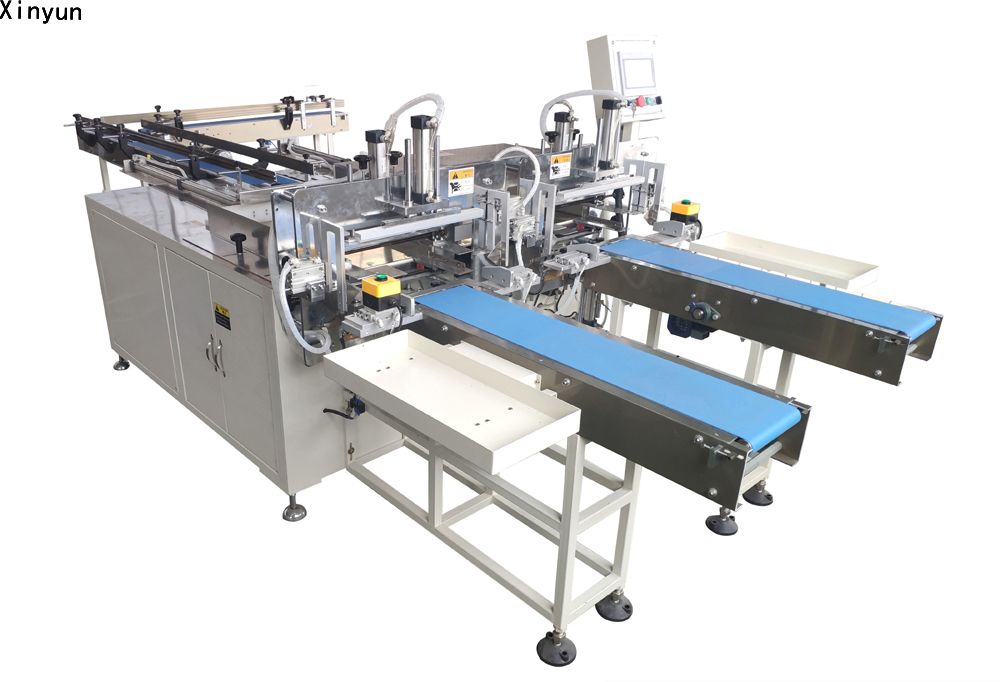
L-fold napkin machines produce standard restaurant napkins folded into an L-shape. These are the most common type, representing 55% of global napkin production. L-fold machines operate at speeds of 600 to 1200 sheets per minute.
1/4 fold napkin machines produce quarter-fold napkins commonly used in fast-food restaurants and cafeterias. The paper is folded twice — once horizontally and once vertically. This format is popular in school canteens and workplace dining areas.
1/6 fold and 1/8 fold napkin machines produce compact multi-fold napkins for commercial dispensers. These machines require more complex folding mechanisms and typically operate at 400 to 800 sheets per minute. The 1/6 fold format is common in European markets, while 1/8 fold is standard in Middle Eastern food service.
Printing Type | Colors | Typical Speed Impact | Application |
No printing | 0 | Maximum speed | Economy napkins, institutional buyers |
1-color printing | 1 | Minimal reduction | Basic brand logo, budget segment |
2-4 color printing | 2-4 | 5% to 10% speed reduction | Premium branded napkins |
Photo-quality | 4+ (flexo/offset) | 10% to 20% reduction | High-end hospitality |
Xinyun's XY-OQ-7000 series napkin paper machines support 1 to 4 color printing configurations with minimal speed reduction, allowing operators to produce both economy and premium napkins on the same machine.
Machine speed is measured in sheets per minute (sheets/min). Entry-level machines operate at 400 to 600 sheets/min. Mid-range machines reach 600 to 900 sheets/min. High-speed industrial machines like the Xinyun XY-OQ-7000K achieve 1200 sheets per minute with stable operation.
Higher speed does not always mean better value. Evaluate speed based on your target production volume. A machine running at 60% of its maximum speed produces more consistent quality and experiences fewer breakdowns than one running at maximum capacity continuously.
Verify the machine can produce the napkin sizes required by your target market. Standard napkin sizes by market:
Market | Common Sizes (mm) |
Africa | 200×200, 240×240, 330×330 |
Middle East | 240×240, 300×300, 330×330 |
South America | 220×220, 240×240, 330×330 |
Europe | 300×300, 330×330, 400×400 |
North America | 330×330, 380×380, 430×430 |
Xinyun napkin paper machines offer customizable size design, adjustable to match any of these market specifications.
A quality napkin machine should handle parent roll weights from 13 gsm (grams per square meter) to 28 gsm. Lighter paper (13-16 gsm) works for economy napkins, while heavier stock (22-28 gsm) produces premium restaurant napkins. Confirm the machine can accommodate:
Jumbo roll diameter: up to 1200mm standard
Jumbo roll inner core: 76.2mm (3 inches)
Paper web width: customized to your napkin size requirements
Embossing adds texture and improves absorbency. Two main technologies exist:
Steel-to-rubber embossing uses a steel engraved roller against a rubber backing roller. This option is more affordable (approximately 15% to 20% less than steel-to-steel) and produces a softer embossing pattern. Rubber rollers require replacement every 12 to 18 months.
Steel-to-steel embossing uses matched male and female steel rollers. This produces deeper, more defined patterns and lasts longer — steel rollers last 5 to 8 years before requiring resurfacing. Steel-to-steel embossing is preferred for premium napkin production.
Pneumatic systems: Automated machines require compressed air at 0.5 MPa minimum. Ensure your facility has an adequate air compressor before installation.
Automatic stop functions: The machine should stop automatically when paper breaks or when the jumbo roll completes unreeling. Xinyun machines include automatic stop on paper break and unreeling fault.
Band saw slitting: For machines converting multiple napkin lanes simultaneously, a band saw slitting unit with a knife-sharpening station maintains consistent cut quality over long production runs.
Finished product output: Some machines deliver finished napkins with a finger-pick feature for easy dispensing, which is valued in consumer packaging applications.
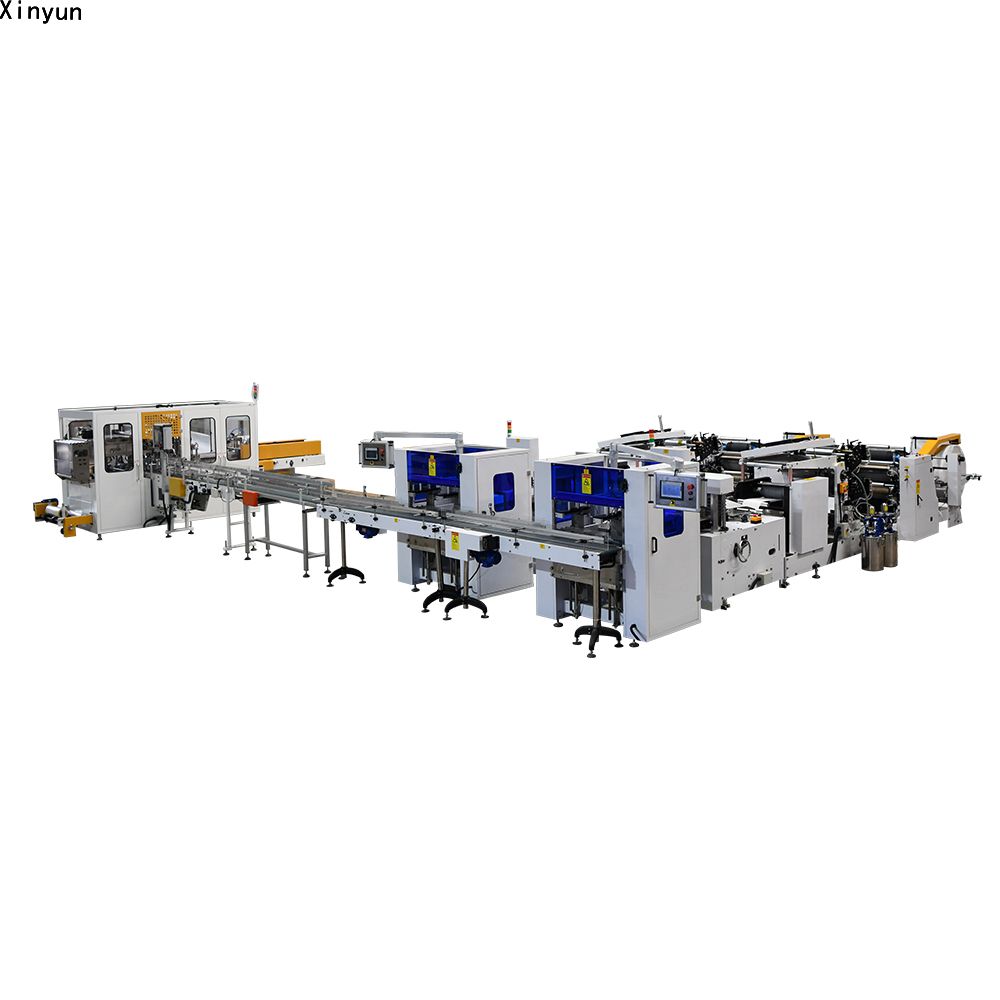
New napkin paper machines — like the Xinyun XY-OQ-7000K — offer:
Full warranty (typically 2 years)
Latest PLC control systems
Customizable specifications (size, printing, folding type)
Factory acceptance testing before shipping
Installation support from the manufacturer
Price range for a mid-range new machine: USD 18,000 to USD 45,000 for a complete folding line with one-color printing.
Used machines cost 40% to 60% less than comparable new equipment. However, risks include:
Worn embossing rollers and folding plates (replacement cost: USD 2,000 to USD 5,000)
Older control systems without modern PLC/HMI interfaces
Non-standard parts requiring custom fabrication
No warranty or after-sales support
For businesses starting their first napkin production line, a new machine with warranty and installation support is generally the lower-risk option despite the higher upfront cost.
Item | Cost Range (USD) |
Napkin folding machine (new, one-color) | 18,000 - 35,000 |
Napkin folding machine (new, 4-color) | 35,000 - 65,000 |
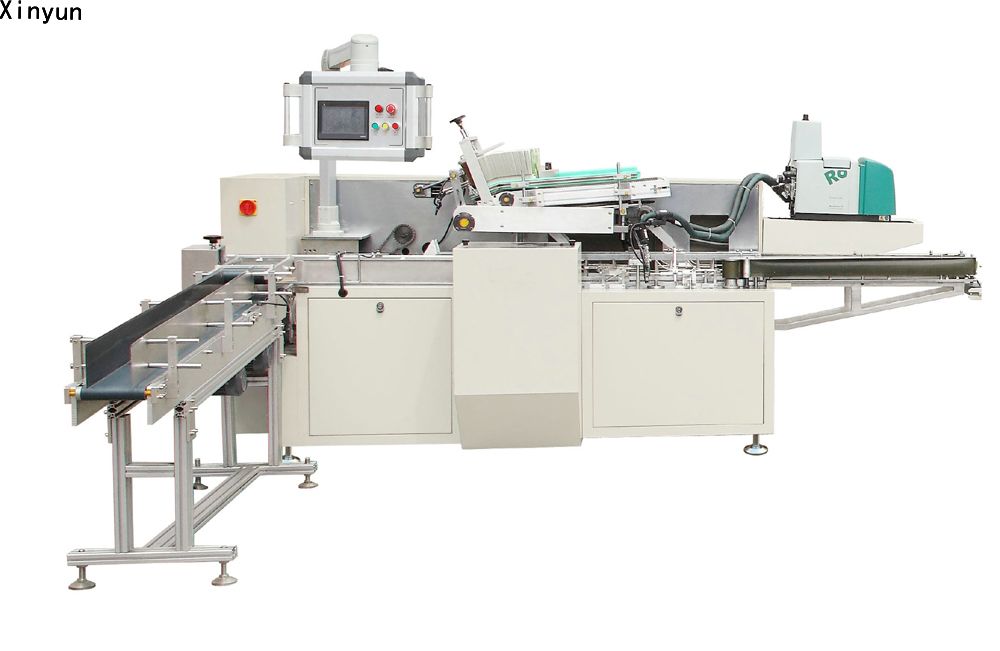
Packing machine (bundles) | 5,000 - 15,000 |
Air compressor | 500 - 2,000 |
Installation and training | 2,000 - 5,000 |
Initial spare parts kit | 500 - 1,500 |
Total (new, basic setup) | USD 26,000 - USD 58,500 |
Napkin paper machines require three-phase power. A standard machine has a main motor power of 5.5KW to 7.5KW plus 2.2KW for the cutting system and additional power for optional components like color printing units. Total connected load for a complete line is 10KW to 15KW.
Confirm with your supplier whether the control system supports your local voltage (220V/380V/415V) and frequency (50Hz/60Hz). Xinyun Machinery configures machines to match local electrical standards.
Before placing an order, confirm with the supplier:
Warranty period (standard: 12-24 months)
Spare parts availability (blades, rollers, pneumatic components)
Technical support response time (Xinyun: within 24 hours)
Operation manual language (English, Arabic, French, Spanish, Portuguese)
Video training availability
On-site installation service terms
Shipping cost and delivery timeline (typically 25-35 days from order to port)
Choosing the right napkin paper machine requires evaluating folding type, print capability, speed, raw material compatibility, and support services against your target market's specific requirements. For businesses targeting Africa, the Middle East, and South America, a machine with multi-fold capability (L-fold, 1/4, 1/6), 1-4 color printing, and 800-1200 sheets/min speed offers the flexibility to serve multiple market segments from a single production line.
Xinyun Machinery has 15+ years of experience manufacturing napkin paper machines for global markets. Contact Xinyun Machinery for a detailed quotation and specification sheet tailored to your production needs.

Professional Manufacturer of Tissue Paper Making Machine.





By continuing to use the site you agree to our privacy policy.