
 +86-18750595100



Copyright © 2025 Fujian Xinyun Machinery Development Co.,Ltd. All rights reserved. Site Map


Time: 2026-07-14
The Middle East tissue paper market is projected to reach 2.3 million tons of consumption by 2030, driven by population growth, tourism expansion, and rising hygiene standards. Countries including Saudi Arabia, the UAE, Kuwait, and Qatar are investing heavily in local paper converting capacity. This analysis covers the key market trends, equipment demand drivers, and machine selection considerations for the Middle East region from 2026 to 2030.
The Middle East consumes approximately 1.8 million tons of tissue paper products annually as of 2025. The market is growing at a compound annual growth rate (CAGR) of 5% to 7% across the Gulf Cooperation Council (GCC) countries. Saudi Arabia represents the largest single market, accounting for 35% of regional consumption, followed by the UAE at 22% and Kuwait at 8%.
Country | Tissue Paper Consumption (kg per person per year) |
UAE | 15 - 18 kg |
Saudi Arabia | 12 - 14 kg |
Kuwait | 10 - 12 kg |
Qatar | 14 - 16 kg |
Oman | 6 - 8 kg |
Average (Middle East) | 8 - 10 kg |
Global average | 6 - 7 kg |
The UAE and Qatar have per capita consumption levels approaching Western European standards (18 to 22 kg), indicating a premium product market. Oman and other emerging markets within the region show growth potential as distribution networks expand.
Governments across the Middle East are implementing policies to reduce dependence on imported tissue paper. Saudi Arabia's Vision 2030 program includes incentives for local manufacturing, including paper converting industries. This has led to a 25% increase in demand for tissue paper converting machines from 2023 to 2025. Import tariffs on finished tissue products in several GCC countries further encourage local production investment.
The UAE hospitality sector, hosting over 25 million visitors annually, is a major consumer of premium tissue products. Hotels in Dubai and Abu Dhabi require specific product formats:
Jumbo toilet rolls for commercial dispensers in hotel public areas
Interfold facial tissue for guest rooms and lobby areas
Multi-fold napkins (1/4 and 1/6 fold) for restaurants and banquets
Equipment capable of producing these commercial-grade products commands a premium in the Middle Eastern market.
Hypermarket chains such as Carrefour, Lulu Group, and Spinneys are expanding across the region. Private-label tissue products now account for 15% to 20% of retail tissue sales in the GCC. This creates demand for flexible production lines that can switch between branded and private-label packaging configurations.
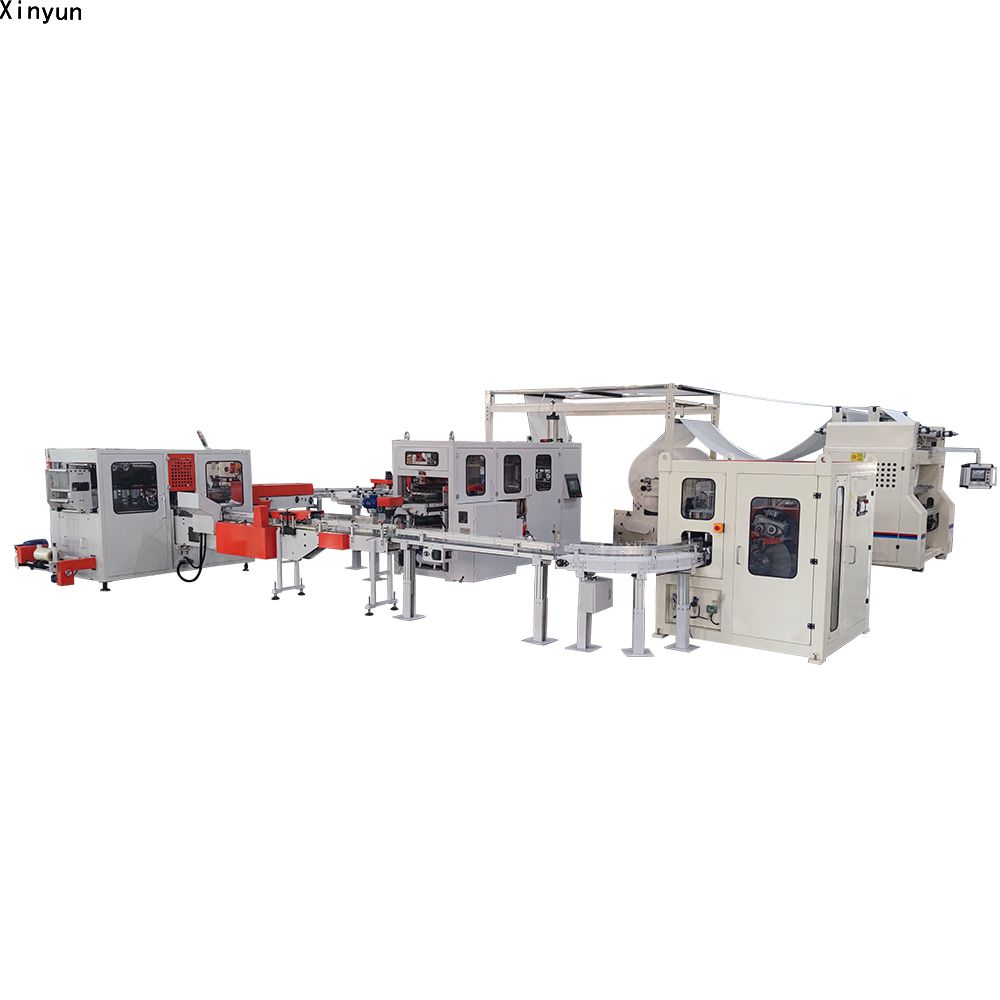
High-speed toilet paper production lines with parent roll widths of 1760mm to 2800mm are in highest demand. Middle Eastern buyers prioritize fully automatic systems with:
PLC touchscreen control with Arabic language interface option
Automatic core feeding (38mm to 76mm diameter)
High-speed embossing (steel-to-steel for premium patterns)
Jumbo roll capacity (finished diameter up to 280mm for commercial use)
Production speeds of 180 to 230 meters per minute are standard requirements for mid-to-large scale facilities.
Facial tissue production lines with 2 to 14 output lanes are increasingly popular as regional demand for boxed facial tissue grows. Key specifications include:
Vacuum suction folding technology for consistent quality
Automatic carton box erecting and sealing
Color printing capability for branded products
Output of 1200 to 2000 facial tissue sheets per minute
Restaurant and food service napkin machines supporting L-fold, 1/4 fold, 1/6 fold, and 1/8 fold configurations are essential for the hospitality sector. Models like the Xinyun XY-OQ-7000K deliver up to 1200 napkin sheets per minute with 1 to 4 color printing options.
Kitchen towel production is growing at 8% annually in the GCC, driven by food service and industrial cleaning applications. Machines with glue lamination, embossing, and color printing capabilities — processing parent rolls up to 2800mm width — are increasingly specified for new production facilities.
Summer temperatures in the Middle East exceed 45°C in many production areas. Machine components must be rated for continuous operation at 50°C ambient temperature. Key modifications include:
High-temperature rated bearings and seals
Enhanced cooling systems for electrical cabinets
Heat-resistant pneumatic components
Coastal production facilities in Dubai, Doha, and Jeddah experience humidity levels above 80% during summer months. Paper moisture absorption can cause production issues if raw materials are not properly stored. Dehumidified storage rooms maintaining humidity below 60% are recommended.
Production facilities near desert areas require enhanced filtration for machine control cabinets and pneumatic systems. Sealed electrical enclosures (IP54 or higher) prevent dust ingress that causes PLC and sensor failures.
Major Middle Eastern ports include Jebel Ali (Dubai), Dammam (Saudi Arabia), Hamad (Qatar), and Salalah (Oman). Shipping time from Chinese ports to the GCC ranges from 18 to 25 days. Xinyun Machinery coordinates shipping through major freight carriers serving these ports.
Tissue paper converting machines typically fall under HS Code 8441 (cutting and converting machinery). Import duties range from 0% to 5% across GCC countries, with free zones offering duty-free import. Required documentation includes:
Certificate of origin
Commercial invoice
Packing list
Bill of lading
GCC conformity certificate (for certain machine types)
Saudi Arabia and UAE require foreign machinery suppliers to have a local service agent or representative for warranty support. Some buyers specify that installation technicians must hold valid GCC work visas before deployment. Xinyun Machinery provides on-site installation support with visa arrangements for the technician.
Machine Type | Typical Specification | Price Range (USD, FOB) |
Toilet paper rewinding line | 1760mm width, 180 m/min, automatic | 25,000 - 55,000 |
Toilet paper production line | 2800mm width, 230 m/min, full auto | 55,000 - 150,000 |
Napkin paper machine | 1200 sheets/min, 1 color printing | 18,000 - 35,000 |
Facial tissue folding machine | 4 lanes, vacuum suction | 30,000 - 80,000 |
Kitchen towel machine | 2400mm width, glue lamination | 40,000 - 100,000 |
Prices include basic control systems but exclude voltage stabilizers, air compressors, and installation services unless specifically requested.
The Middle East tissue paper market offers strong growth potential for local manufacturers from 2026 to 2030. Key opportunities lie in premium toilet paper production for the hospitality sector, multi-fold napkin machines for food service, and facial tissue lines for the expanding retail private-label segment. Equipment that includes climate adaptation features, PLC automation, and Arabic language interfaces holds a competitive advantage.
Xinyun Machinery has supplied tissue paper converting equipment to buyers in Saudi Arabia, UAE, Kuwait, and Oman. Contact Xinyun Machinery for equipment specifications and pricing tailored to your Middle East production requirements.

Professional Manufacturer of Tissue Paper Making Machine.





By continuing to use the site you agree to our privacy policy.