
 +86-18750595100



Copyright © 2025 Fujian Xinyun Machinery Development Co.,Ltd. All rights reserved. Site Map


Time: 2026-03-02
Starting or operating a Pocket Tissue Manufacturing business can be highly profitable — but only if production costs are carefully controlled. From raw materials to labor and energy consumption, every factor affects your overall tissue production cost.
For small and medium-sized manufacturers, choosing the right Pocket Tissue Machine and optimizing the production line is the key to maximizing profit margins. In this guide, we’ll explore practical cost-saving strategies that help reduce waste, improve efficiency, and increase output without sacrificing quality.
One of the biggest mistakes investors make is choosing equipment based only on price. A low-cost machine with unstable performance often leads to:
Frequent downtime
Higher maintenance expenses
Increased material waste
Lower production speed
A high-quality Pocket Tissue Machine should offer:
Stable high-speed folding
Precise cutting accuracy
Automatic counting and stacking
Easy adjustment for different sizes
Compatibility with various jumbo rolls
Reliable machinery reduces unexpected breakdowns and lowers long-term operating costs.
Raw materials represent a major part of total tissue production cost. Poor tension control or inaccurate cutting leads to significant waste.
To reduce material loss:
Use machines with automatic tension control systems
Ensure accurate embossing and folding alignment
Choose equipment with precise trimming functions
Reduce start-up waste through intelligent control systems
Modern pocket tissue production lines are designed to maximize raw material efficiency and minimize scrap rates.
Energy consumption is often overlooked but plays a major role in operational expenses.
A modern Pocket Tissue Machine should include:
Energy-efficient motors
Optimized transmission systems
Smart speed control
Reduced idle running time
Energy-saving designs not only lower electricity bills but also improve long-term machine durability.
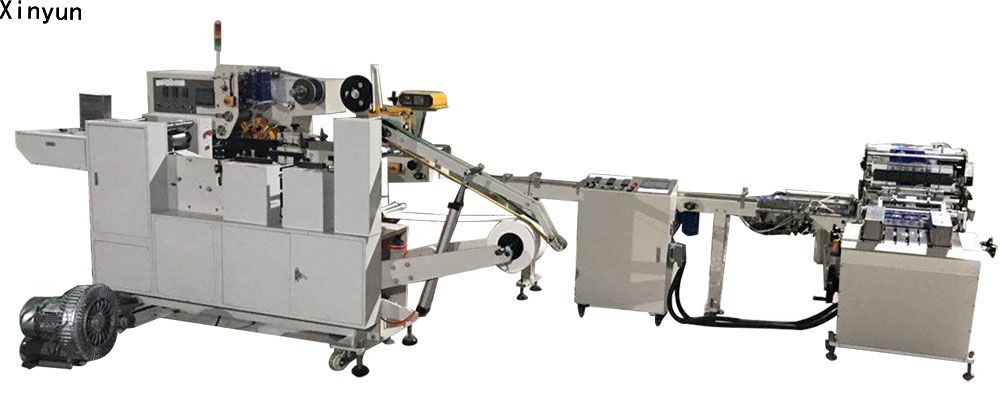
Labor is another significant expense in pocket tissue manufacturing.
An automated production line can integrate:
Automatic folding
Automatic cutting
Automatic counting
Automatic packing
Automatic bundle sealing
Instead of hiring multiple operators for separate processes, an integrated line reduces manpower requirements while increasing production stability.
For small and medium businesses, this directly improves profit margins.
Unexpected machine failure can be extremely costly.
To reduce downtime:
Choose machines with stable structural design
Use high-quality mechanical components
Implement regular preventive maintenance
Ensure spare parts availability
Reliable equipment with easy maintenance access significantly reduces repair time and service costs.
Many manufacturers operate separate machines for folding, cutting, and packing. While this may seem economical initially, it often causes:
Production bottlenecks
Alignment errors
Higher labor dependency
Increased transfer waste
A complete Pocket Tissue Production Line integrates all processes seamlessly, improving workflow and reducing overall tissue production cost.
Over-investing in high-capacity machines can increase financial pressure, while under-capacity machines limit growth.
Before purchasing a Pocket Tissue Machine, consider:
Target market demand
Expected monthly output
Available factory space
Labor availability
Long-term expansion plans
Matching equipment capacity with real business needs ensures sustainable growth.
In pocket tissue manufacturing, cost control is not about buying the cheapest machine — it’s about reducing long-term operational expenses.
A reliable machine provides:
Stable performance
Lower scrap rates
Higher production speed
Reduced maintenance costs
Longer service life
This directly improves ROI and competitiveness in the market.
Running a successful pocket tissue production line requires more than just equipment — it requires smart planning and strategic investment.
By:
Selecting a high-quality Pocket Tissue Machine
Reducing raw material waste
Improving energy efficiency
Automating labor-intensive processes
Investing in integrated production systems
Manufacturers can significantly reduce tissue production cost while increasing profitability.
If you are planning to start or upgrade your pocket tissue manufacturing business, choosing the right equipment partner is essential.
Contact us today to learn how our advanced pocket tissue machines and complete production line solutions can help you reduce costs and maximize output.

Professional Manufacturer of Tissue Paper Making Machine.





By continuing to use the site you agree to our privacy policy.